Praying on Time in a New Country
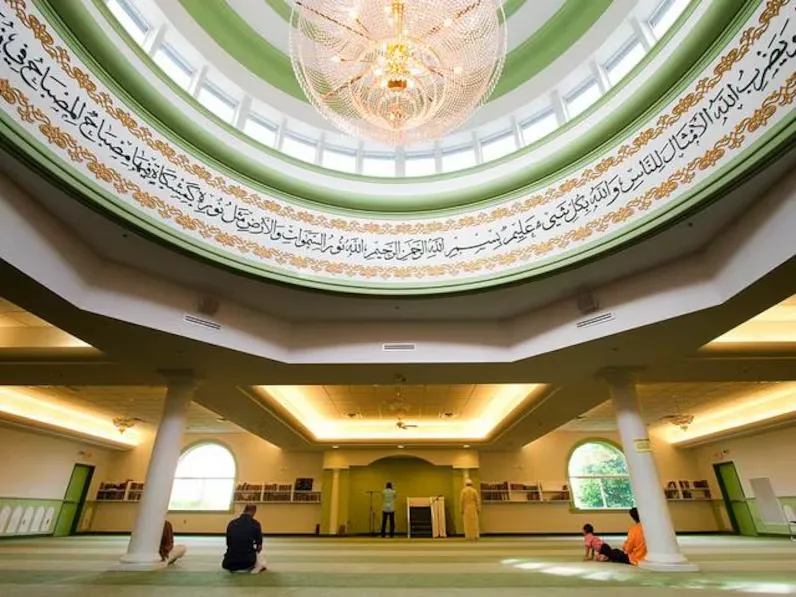
Photo: Jamiat-Ul-Ansar Mosque, Brampton, Ontario. MaplesyrupSushi, CC BY-SA 4.0, via Wikimedia Commons.
Back home, the adhan found you, from the mosque down the lane, then the next one answering a beat behind it. Here, you have to go find it yourself. Here's how prayer life actually works once you land.
In Kerala, prayer was ambient. You didn't have to plan for it; it arrived, five times a day, carried on loudspeakers across paddy fields and narrow lanes, and the whole neighbourhood's rhythm bent around it. In Canada, prayer becomes something you have to build back into your day on purpose. That's not a loss, exactly, but it is an adjustment nobody quite prepares you for, and getting it right in the first few months makes the rest of settling in easier.
Finding your first mosque
Your first instinct will be to look for the nearest mosque the way you would in Kerala: on foot, a few minutes away. Here, "nearest" often means a twenty or thirty minute drive, and in a city like Toronto or Calgary, most Friday congregations are a genuine trip rather than a stroll. That's simply the geography of a country where Muslims are a small percentage of a very large population, spread across enormous distances.
What helps is that the mosques serving the GTA, Ottawa, Calgary, Edmonton, and the other cities our community has settled in are established, well-run institutions with full weekly programming, not makeshift prayer halls. The Islamic Institute of Toronto, the Islamic Foundation of Toronto, and the Muslim Association of Canada's centres across more than a dozen cities are all real options worth visiting in your first weeks, simply to see which one's community and timing suit you. Our own organizations, listed on this platform, exist precisely to help with this. Reach out to whichever is closest to your settlement city, and someone will point you to where people from home already pray.
Prayer at work and school
This is the part that worries newcomers most, and it turns out to be less fraught than expected. Ontario's Human Rights Code, like similar protections across the other provinces, requires employers to accommodate religious practice up to the point of undue hardship. In practice, this almost always means you can ask for five quiet minutes for Dhuhr or Asr, and a reasonable employer will find you a spare room, an unused office, or simply won't mind you stepping into a stairwell. The key is asking early and directly, in the same practical tone you'd use to ask for anything else at work, rather than waiting and hoping it becomes obvious. Most people find their manager's reaction is a shrug, not a confrontation.
Universities and colleges are usually easier still. Most have a dedicated prayer room and an active Muslim Students' Association that already knows the building's quiet corners. If you're a student, that's often your fastest route to a whole ready-made community, not just a place to pray.
Jumu'ah on a day that isn't a holiday
The bigger adjustment is Friday itself. In Kerala, Jumu'ah shaped the whole day. Here, Friday is an ordinary working day, and Jumu'ah is squeezed into a lunch break like everything else. The common solution is an extended lunch hour, agreed with your manager in advance, timed against your local mosque's khutbah schedule. Most mosques in our cities run a second or third Friday jamaat specifically to catch the office lunch crowd. It takes one conversation with your employer to set this up as a standing weekly arrangement, and most newcomers say that conversation goes more smoothly than they expected.
The Ramadan you didn't expect
Nothing prepares you for how much Ramadan itself changes depending on the year. Kerala sits close enough to the equator that day length barely moves, roughly thirteen hours of daylight, fasting or not, whatever month Ramadan falls in. Canada does not have that mercy. Because Ramadan follows the lunar calendar, it drifts through the seasons over a 33 year cycle, and at this latitude, the seasons swing hard. A Ramadan that lands in the depths of a Canadian winter can mean a fast of ten or eleven hours, done before you'd even reach lunchtime back home. A Ramadan that lands in June or July, on the other hand, can mean fasting for close to eighteen hours in a city like Toronto, with Maghrib arriving well past nine at night.
Both extremes take adjustment. The short winter Ramadans feel almost too easy, then throw off your sleep because Isha and Taraweeh push into the evening while suhoor barely exists. The long summer ones are a genuine physical test, especially your first one. Hydrate hard at suhoor, don't overdo iftar all at once, and don't be surprised if the community's Iftar gatherings become the highlight of your week rather than an occasional treat. They usually are.
Eid without the day off
Eid is not a statutory holiday anywhere in Canada, which surprises almost everyone in their first year. Most workplaces will grant it as a vacation or personal day if you ask ahead of time, and a growing number of school boards now formally recognize both Eids as days when no tests or major assignments should be scheduled. Policies vary district by district though, so it's worth asking your child's school directly rather than assuming. What Canada lacks in statutory recognition, our community tends to make up for in the celebration itself. Eid prayer grounds and grand celebrations run by organizations like MMAC, Merchant Foundation, and others across the country regularly draw hundreds of families, chandeliers and all.
You're not building this alone
Every part of this, the mosque, the Friday lunch arrangement, the Ramadan adjustment, the Eid celebration, gets easier the moment you're plugged into people who've already done it. That's the entire reason our organizations exist: not just to gather for Eid, but to be the people you text at 11pm asking where Maghrib prayer is happening tonight. Find your city's group, say salaam, and let someone who's already been through their first Canadian Ramadan tell you what actually helped.