Getting Your Kids Into School
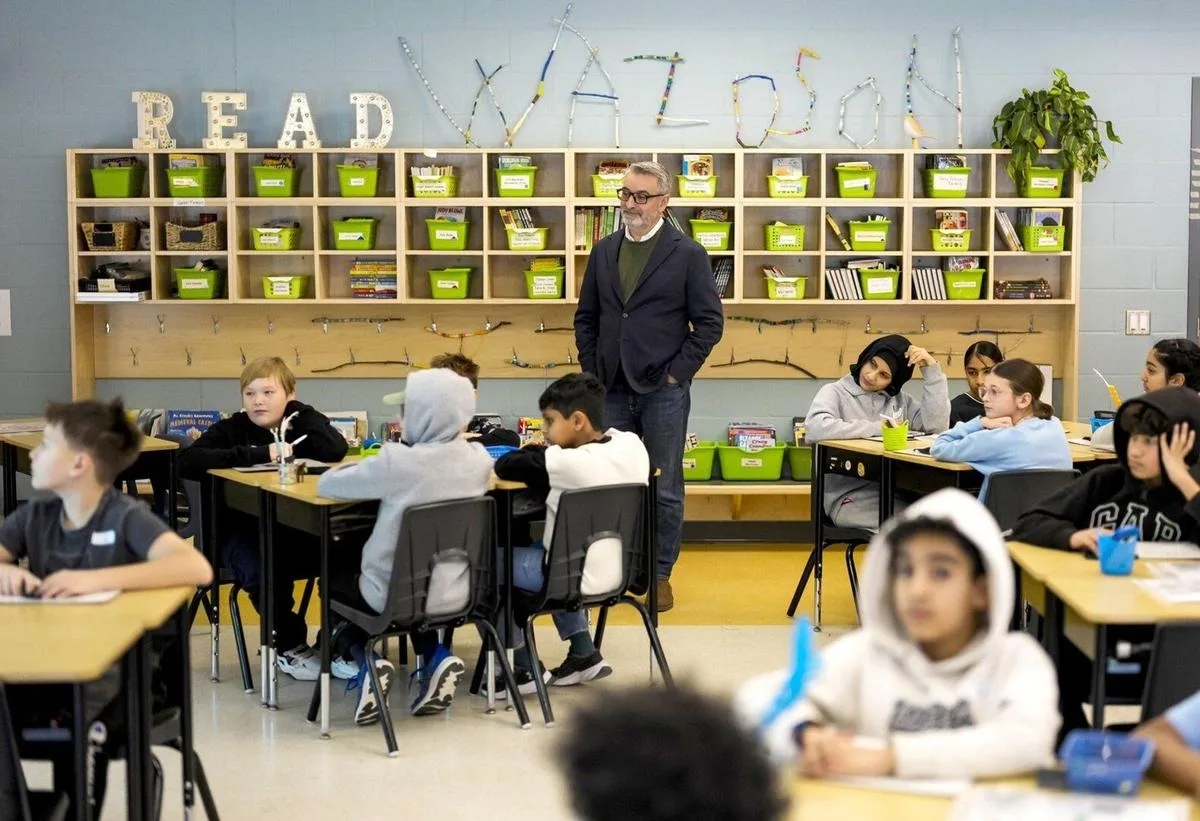
Photo: King Edward Elementary School, Windsor, Ontario. Chris Woodrich, CC BY-SA 4.0, via Wikimedia Commons.
No entrance exam, no donation, no waiting list you have to fight your way onto. Getting your child into a Canadian public school is simpler than Kerala prepares you to expect, but the system underneath it works differently enough to catch every newcomer off guard at least once.
If you're coming from Kerala's schooling culture, the biggest adjustment isn't academic. It's how little friction there is at the front door. Public school in Ontario, kindergarten through grade 12, is free for citizens and permanent residents. There's no entrance exam, no interview, no donation expected, no waiting list to maneuver. Your child is simply entitled to a spot at the public school assigned to your home address, and registering them is closer to paperwork than to competition.
Which school, and how to register
Canadian public schools work on a catchment system. The school your child attends is determined by where you live, not by which school you'd prefer or which one has the best reputation on paper. When you move, check your local school board's website (Toronto, Peel, York, and every other board runs its own) and enter your address to find your catchment school, then register directly with that school or the board's central registration office.
You'll generally need proof of your child's age, usually a birth certificate or passport, proof of your address such as a lease or a utility bill, proof of guardianship if you're not both listed parents, and immunization records. If you're missing one of these, don't let it stop you from starting the process. Schools in Ontario are legally required to enroll a child even while documentation is being sorted out, and they cannot ask about your immigration status, your SIN, or your OHIP card as a condition of enrollment.
The ESL and ELD support most newcomers don't know exists
If your child's first language isn't English, or their prior schooling looked different from the Canadian curriculum, ask the school directly about ESL and ELD support at registration. These are real, funded provincial programs, not informal accommodations: ESL is for students who read and write well in their first language but need to build English, while ELD is for students whose prior schooling was limited or interrupted. At the secondary level, up to three ESL or ELD credits can even count toward the four English credits every student needs to graduate, which matters more than it sounds like for a teenager arriving mid-way through high school. Ask about this by name. It isn't always volunteered.
What actually feels different, day to day
Beyond the paperwork, the day-to-day rhythm takes adjustment too. Canadian classrooms lean more heavily on group projects, class discussion, and independent research than the more exam-centered style many of us grew up with in Kerala, and report cards read very differently, with less emphasis on class rank and more on individual growth. Parent-teacher conferences are genuinely two-way conversations, and teachers generally welcome (and expect) a parent who shows up with questions.
Keeping the rest of it alive
What the public system won't do is teach your child Quran, Arabic, or Malayalam, and this is where our own community's weekend programs matter most. Several of the organizations on this platform run madrasa classes, Arabic instruction, and cultural programming specifically so that what your child gains in one direction doesn't come at the cost of what they'd otherwise lose in the other. Ask your city's organization what's running near you. Most started exactly because another parent asked the same question first.